
Stories created together. Language worth revisiting.
Explore two personalised storybooks developed from learners’ ideas with teacher guidance and AI-assisted illustration and narration tools. Each story provides meaningful opportunities to read, listen, talk and revisit vocabulary in context.
 Read • Listen • Discuss
Choose a story to explore.
Both books can be read directly on this page, or opened in a separate tab for a larger view.
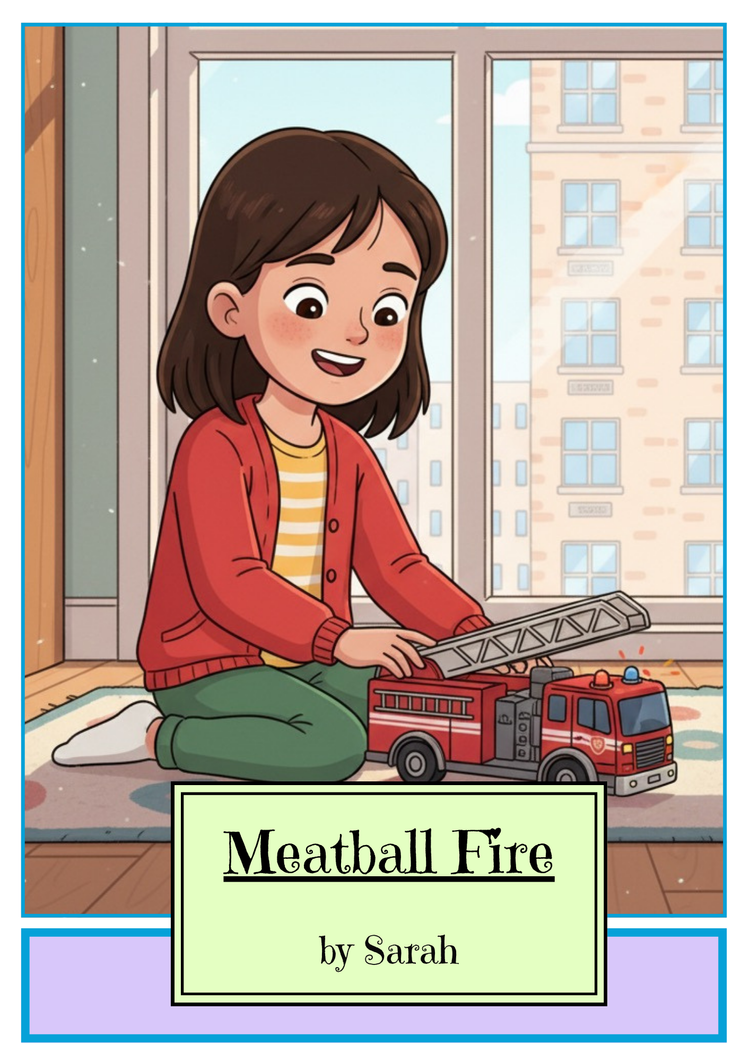
Meatball Fire
What begins as a cooking mishap becomes an unexpected emergency. A young character recalls an important safety lesson and takes action, creating opportunities to discuss decisions, emotions and real-world language.
Read the digital storybook
Interactive flipbook provided by Heyzine
Explore target vocabulary in Meatball Fire
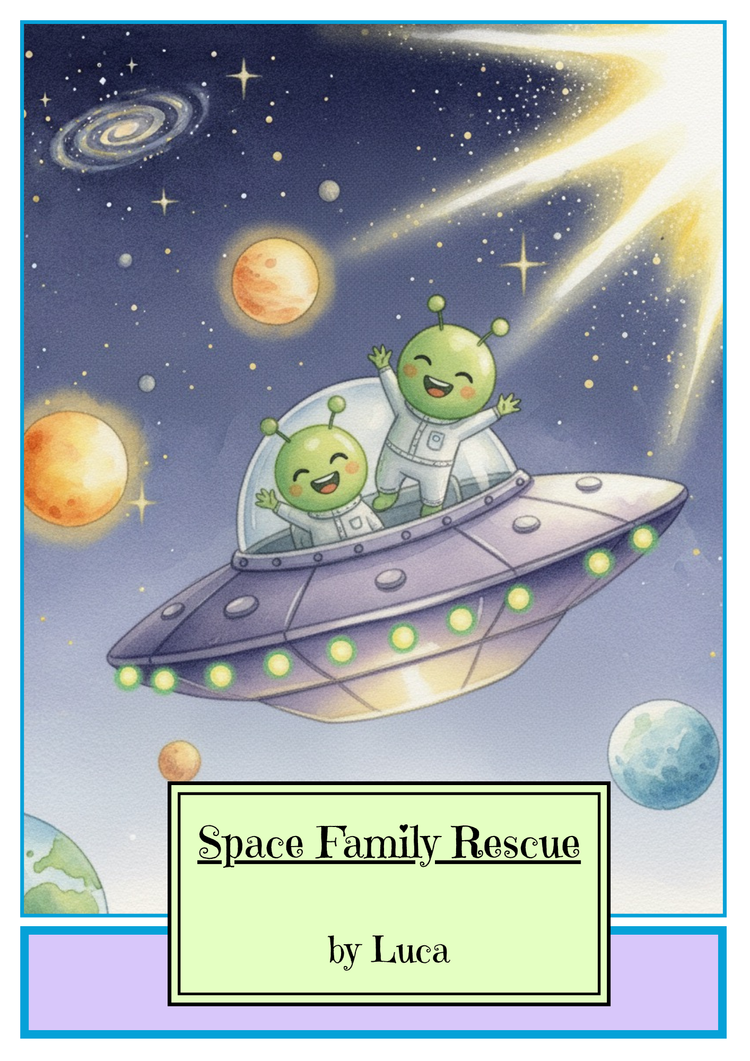
Space Family Rescue
Luca and his alien family crash-land on Earth and must work together to repair their spaceship. The story combines the learner’s imaginative ideas with opportunities to practise language about cooperation, plans and problem-solving.
Read the digital storybook
Interactive flipbook provided by Heyzine
Explore target vocabulary in Space Family Rescue
One word. Different story contexts.
These original Story Learning Lab flashcards show the word permission in three different illustrated scenes. Repeated encounters can help learners connect vocabulary to meaning and use.
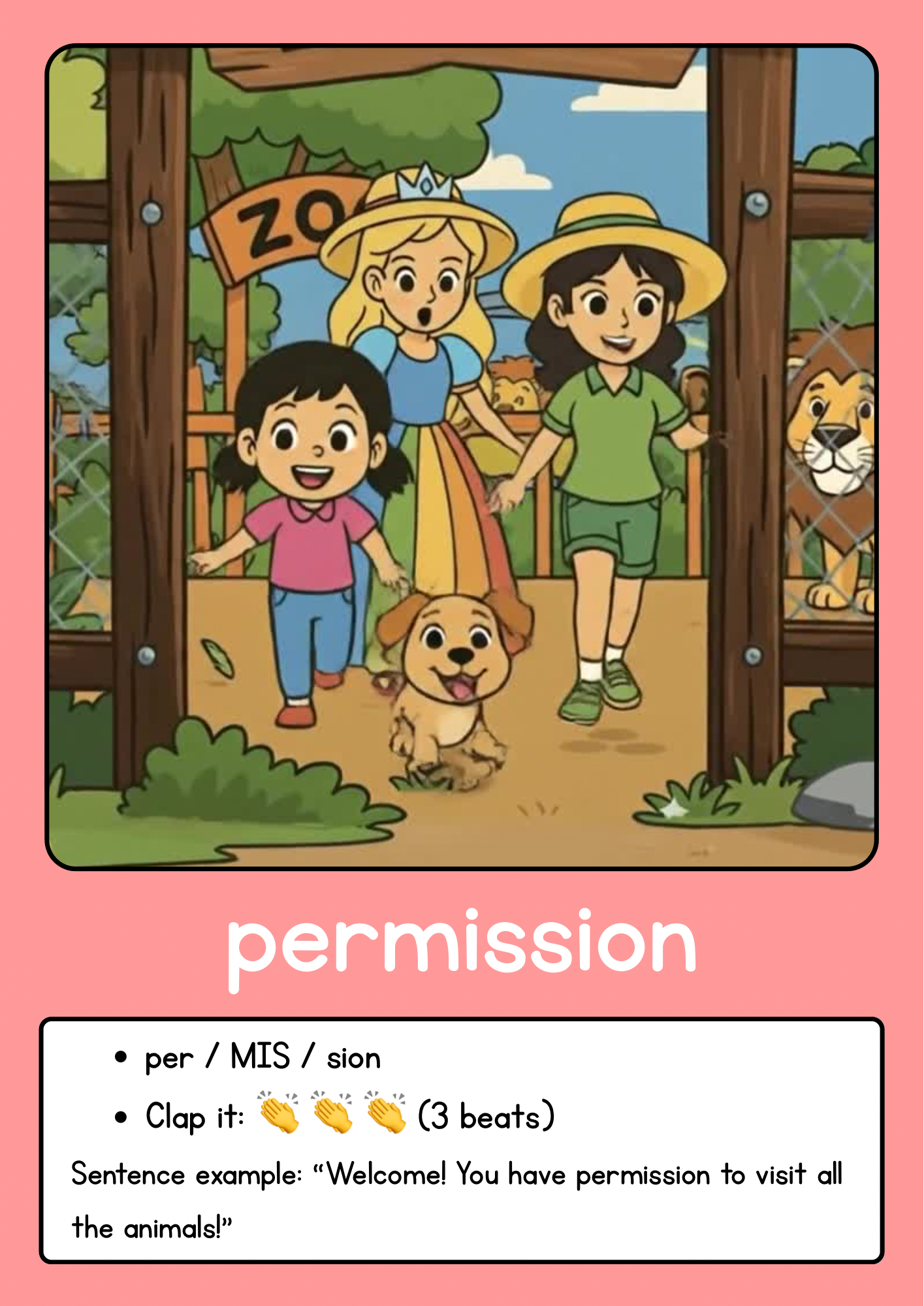
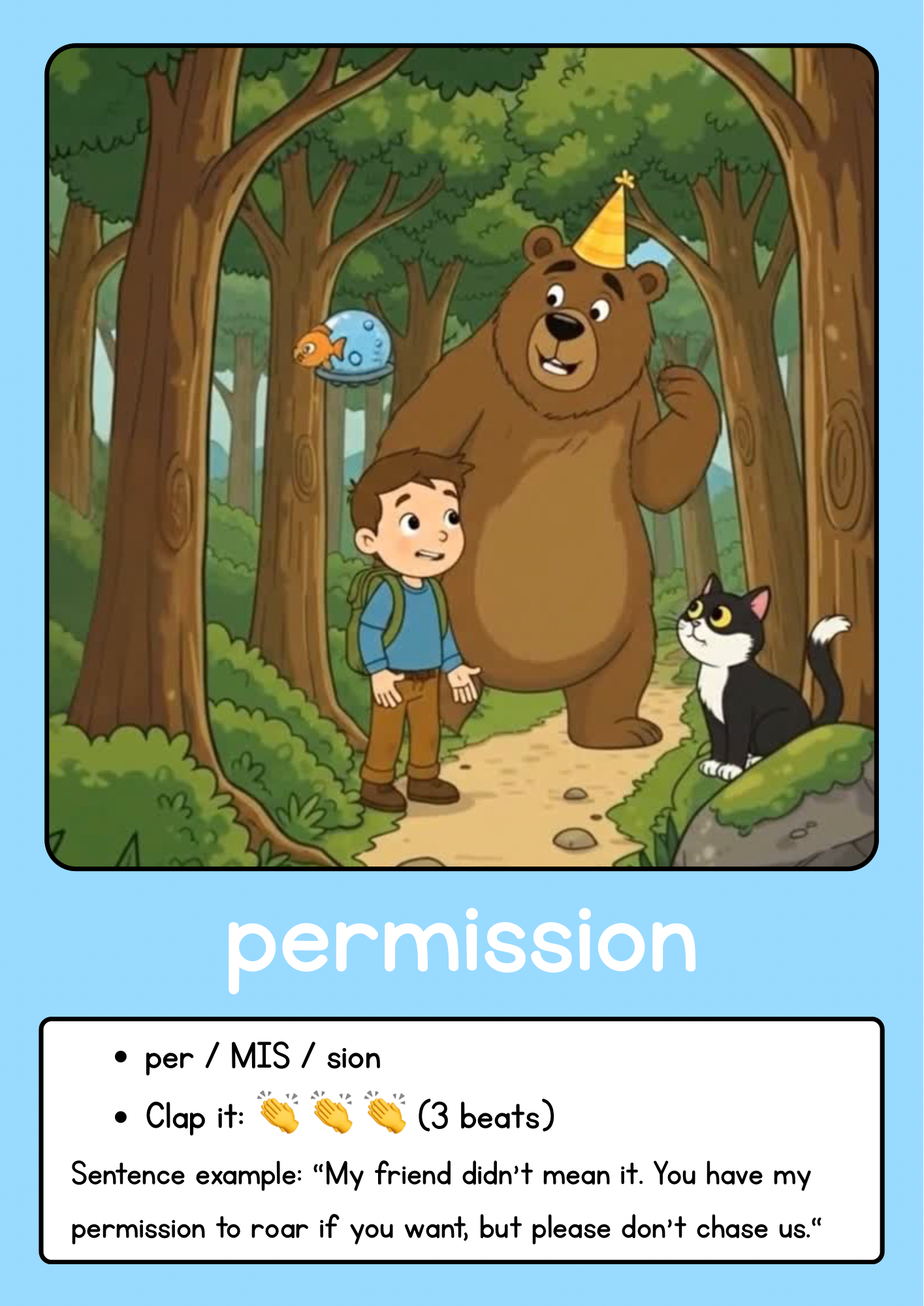
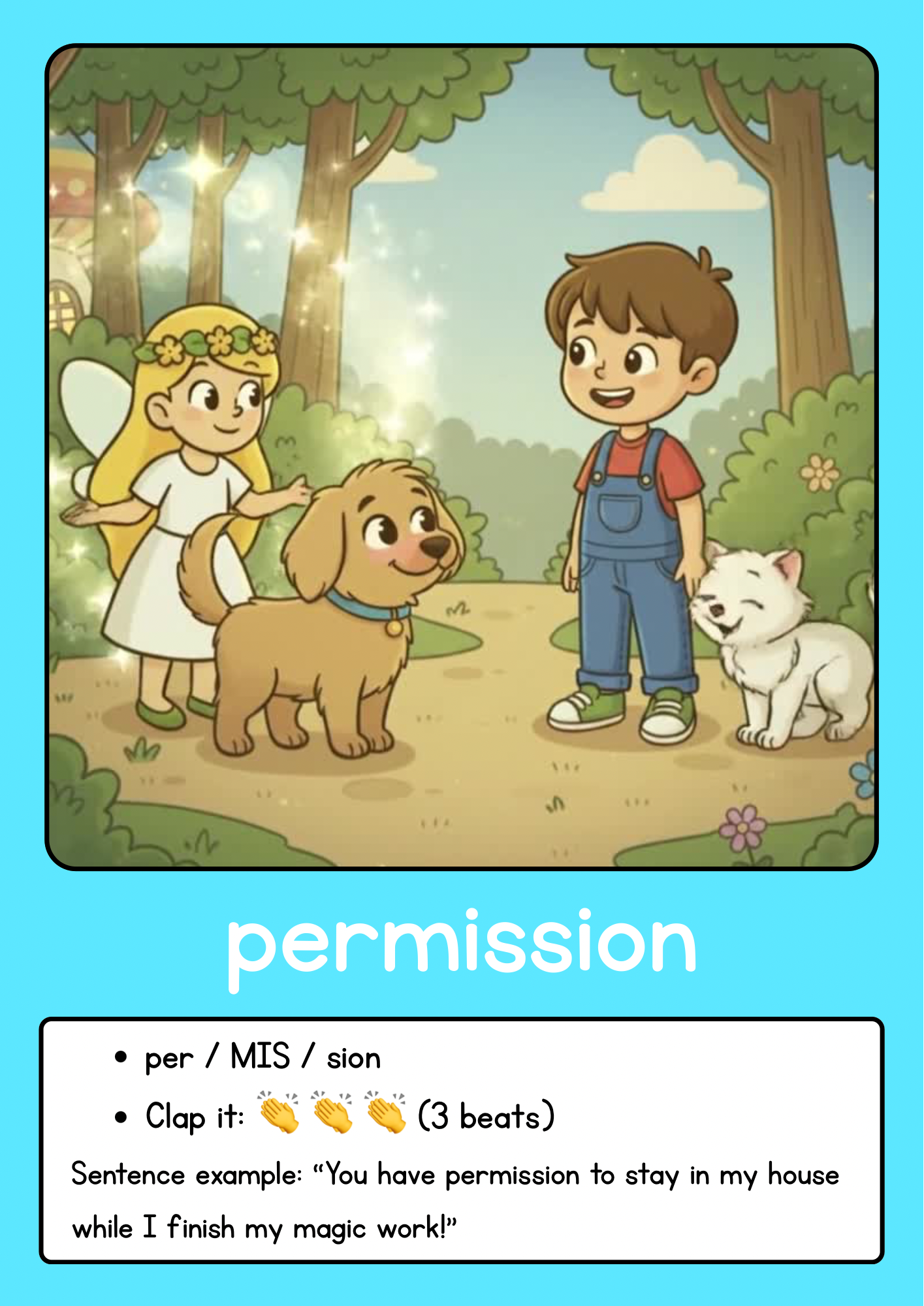
These are illustrative classroom examples. Teachers can adapt vocabulary support and prompts to the needs of their learners.
A simple classroom reading sequence.
Use the stories flexibly: a book can support group reading, small-group discussion, individual rereading or language practice over several lessons.
Predict and prepare
Explore the cover and characters. Introduce a few important words and invite learners to predict what might happen.
Read and discuss
Pause for questions, connect illustrations to language and invite students to notice or use the target words.
Retell and revisit
Ask learners to retell events, recall words without looking and reuse vocabulary in new sentences or activities.
From personalised stories to practical teaching resources.
Discover the classroom method, browse related teaching materials and explore more digital reading resources. Printed copies can also be prepared for offline classroom use.