
Ideas from research. Resources for real classrooms.
I'm Ben Teacher, an ESL/EFL educator based in Seoul, South Korea. I develop practical, research-informed learning materials for young English learners, particularly children aged 6–11.
Story Learning Lab grew from a simple aim: to connect children's creativity with purposeful language teaching, and make research ideas useful in everyday lessons.
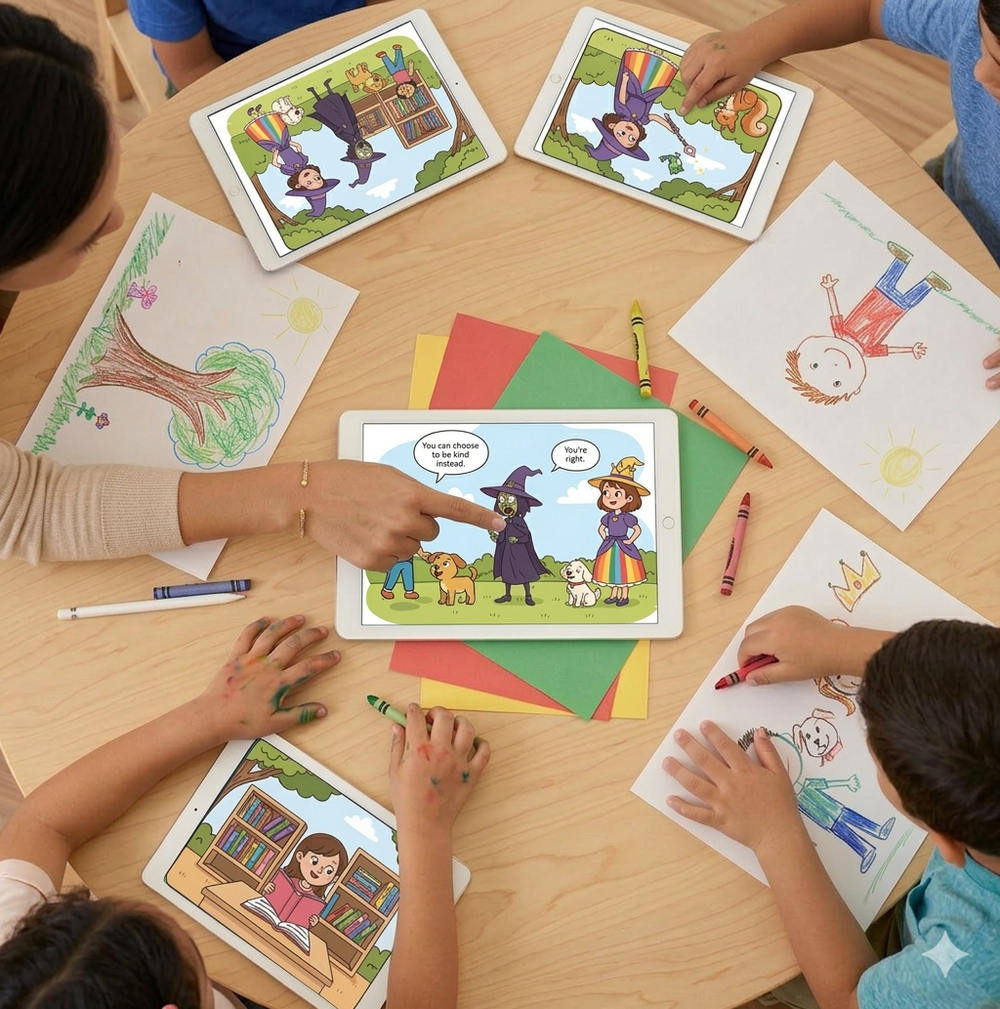
Built around real teaching challenges.
Teaching young English learners in Seoul has shown me how much teachers need to balance: phonics, reading, writing, speaking, vocabulary and differing levels of confidence — often with limited preparation time.
I wanted resources that did more than fill a lesson. They needed to give children a meaningful reason to use language while helping teachers guide and assess learning.
Learner ideas, guided by the teacher.
Technology is a supporting tool. Learners contribute meaningful ideas; the teacher plans the learning goals, shapes and reviews the materials, and leads their classroom use.
Choose a learning focus
Identify relevant vocabulary, reading goals and the level of support learners need.
Listen to learners
Invite characters, places, interests and problems through guided discussion and planning.
Develop the story
Use AI-assisted drafting, illustration or narration where helpful; check and revise every element.
Read and revisit
Use digital and printed stories for discussion, supported reading, retrieval and further practice.
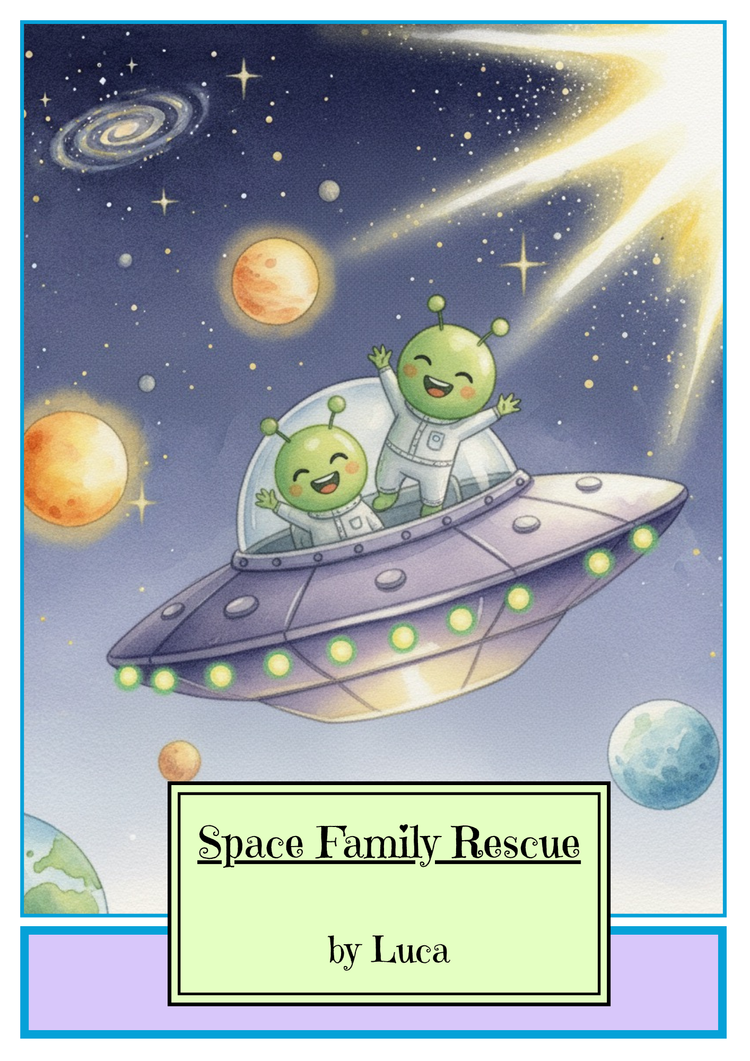
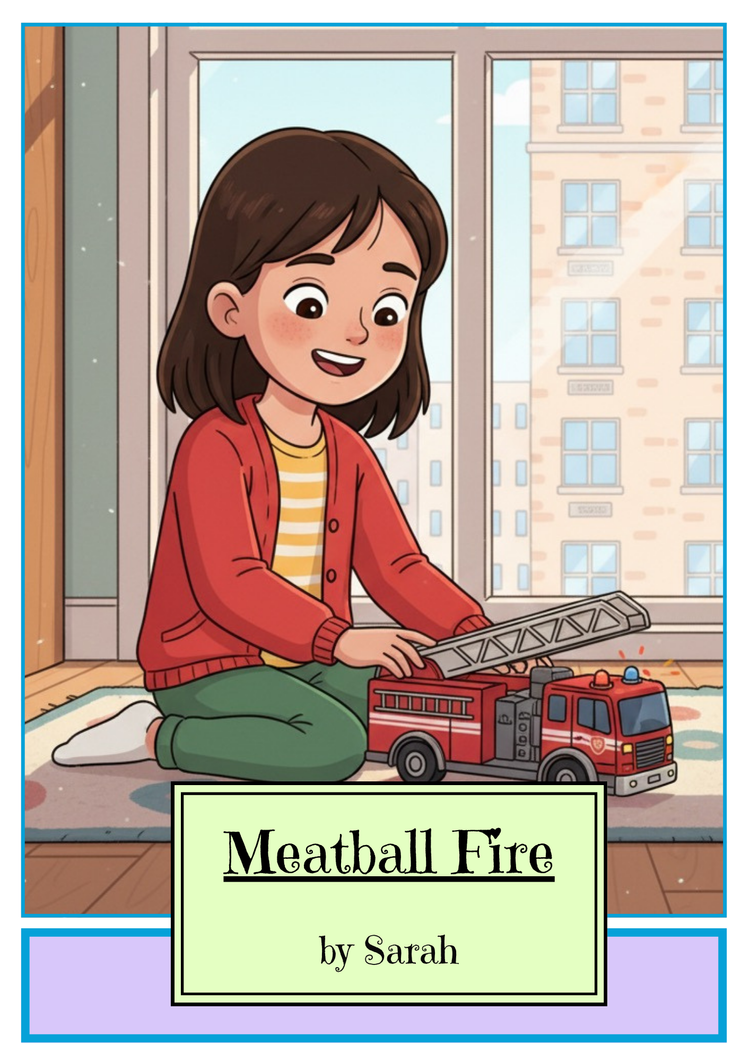
When a child's ideas become a story.
Original stories such as Space Family Rescue and Meatball Fire show how learner contributions and carefully selected language can be brought together in a finished text.
Students can read, listen, discuss and revisit their story. Printed copies make continued reading and classroom activities possible offline.
Explore the original storybooks →Five principles behind the materials.
These priorities reflect my classroom experience and the research traditions explored throughout Story Learning Lab.
Character and social-emotional growth
Stories give children opportunities to discuss kindness, teamwork, empathy, responsibility and the choices characters make — alongside their language learning.
Meaning before memorisation alone
Vocabulary becomes more interpretable when connected to characters, events and familiar contexts. Stories provide meaningful opportunities to encounter, use and revisit language.
Scaffolding towards independence
Modelling, sentence frames, visuals, targeted questions and guided practice help learners approach tasks they cannot yet manage alone. Support changes as competence develops.
Purposeful repetition and retrieval
Revisiting language through reading, word games, speaking and recall gives students several chances to strengthen and apply their learning, not simply repeat a drill.
Practical resources that respect teachers' time
Clear instructions, adaptable formats and low-preparation activities matter. The aim is to leave teachers more time for feedback, responsive guidance and meaningful interaction.
Ideas and tools for everyday teaching.
Story Learning Lab brings practical resources together with explanations of the learning ideas that inform them.
Stories & comprehension
Story elements, characters, settings, sequencing and discussion.
Phonics & word work
Sight-word practice, vocabulary activities and printable games.
Writing & speaking
Sentence-building, presentations and guided expression.
Story making & themes
Student-led story planning and classroom-friendly thematic activities.
Curiosity, evidence and careful claims.
The initial classroom study was small, short and non-randomised. It offered useful observations and exploratory findings, but it cannot establish that personalised storytelling is generally more effective than other approaches.
Story Learning Lab aims to translate relevant educational research into thoughtful classroom practice while remaining open to new evidence and improvement.
See the research foundations →For curious teachers and growing learners.
Whether you're looking for a ready-to-use resource, exploring story-based learning or interested in collaboration, you're welcome to connect.