
From a child's idea to a story worth revisiting.
Story Learning Lab combines learner ideas, carefully selected vocabulary and teacher-guided AI-assisted creation to make personalised stories young English learners can read, discuss and return to.
Designed for young ESL/EFL learners, with teacher judgement at every stage.
Three connected stages, guided by the teacher.
The technology helps produce the finished story; the learner's interests and the teacher's instructional decisions shape it.
Generate and explore ideas
Students choose characters, settings and events through discussion and the Story Making Pack™. The teacher identifies suitable target vocabulary and provides prompts and language support.
Co-create and refine the story
The teacher uses AI-assisted writing and illustration tools to develop the narrative, naturally incorporate lesson vocabulary and revise the result for clarity, accuracy and age-appropriateness.
Read, discuss and revisit
The completed digital book supports reading, listening and discussion, with vocabulary revisited through questions, flashcards and repeated reading. A printed copy is also produced for offline use.
Learning continues beyond the first reading.
Real materials from the storytelling process.
Rather than beginning with an AI-generated story, the process starts with children contributing the ideas that make a narrative their own.
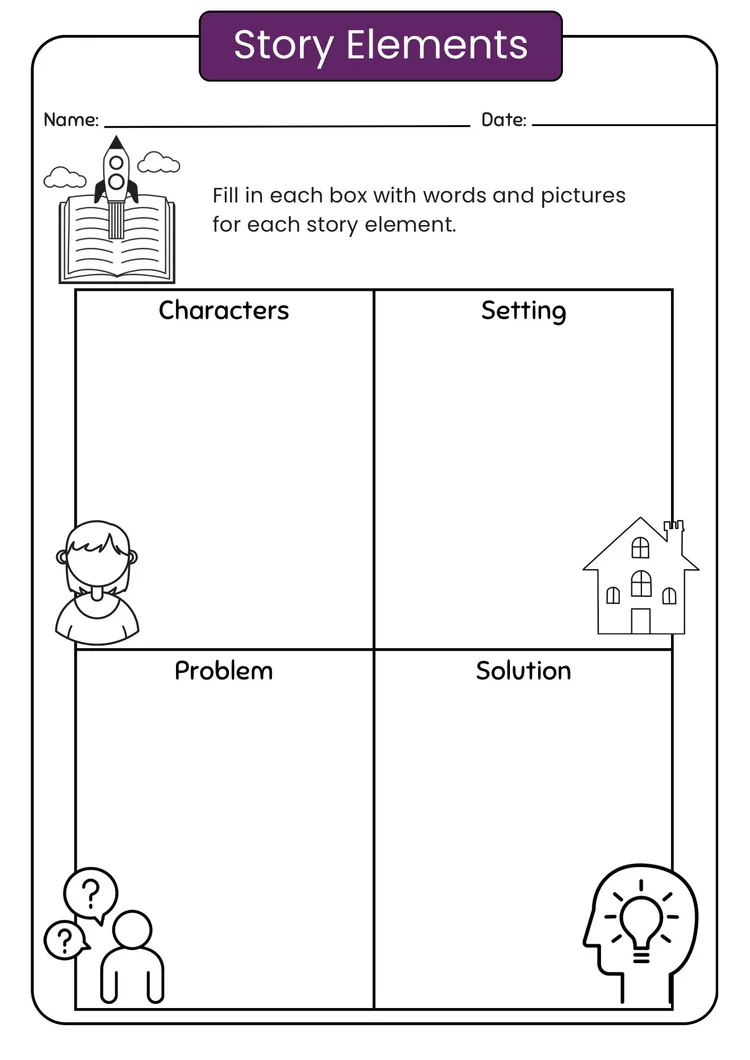
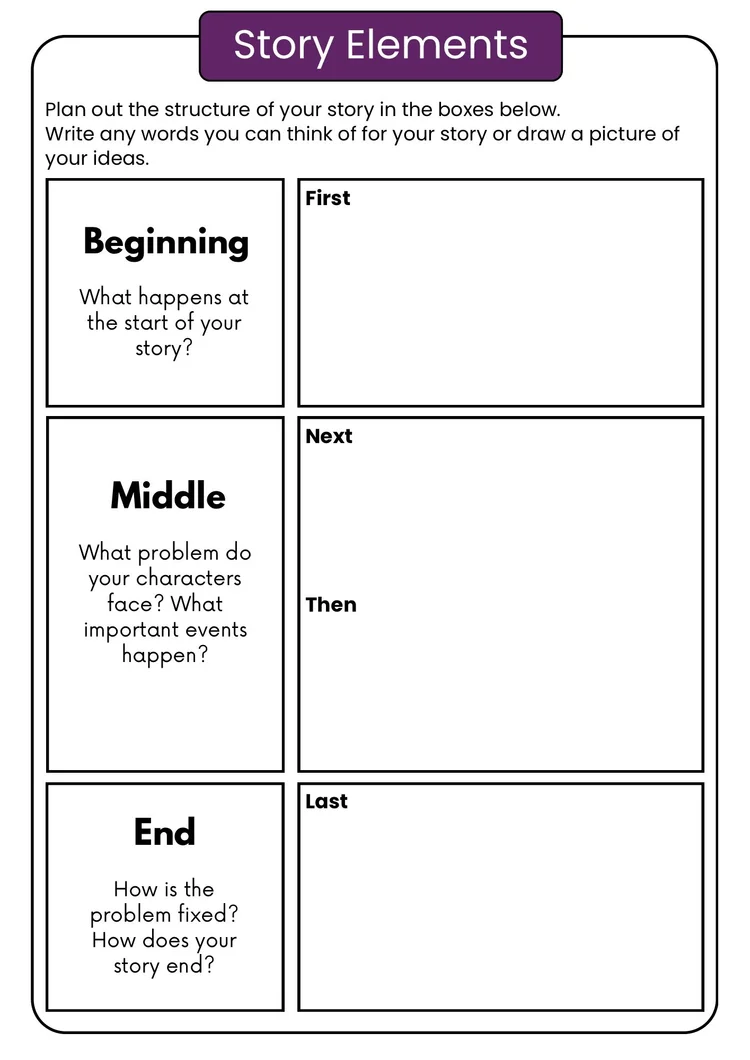
Idea planning
Guided prompts give learners space to contribute ideas, vocabulary and possible events before a narrative is drafted.
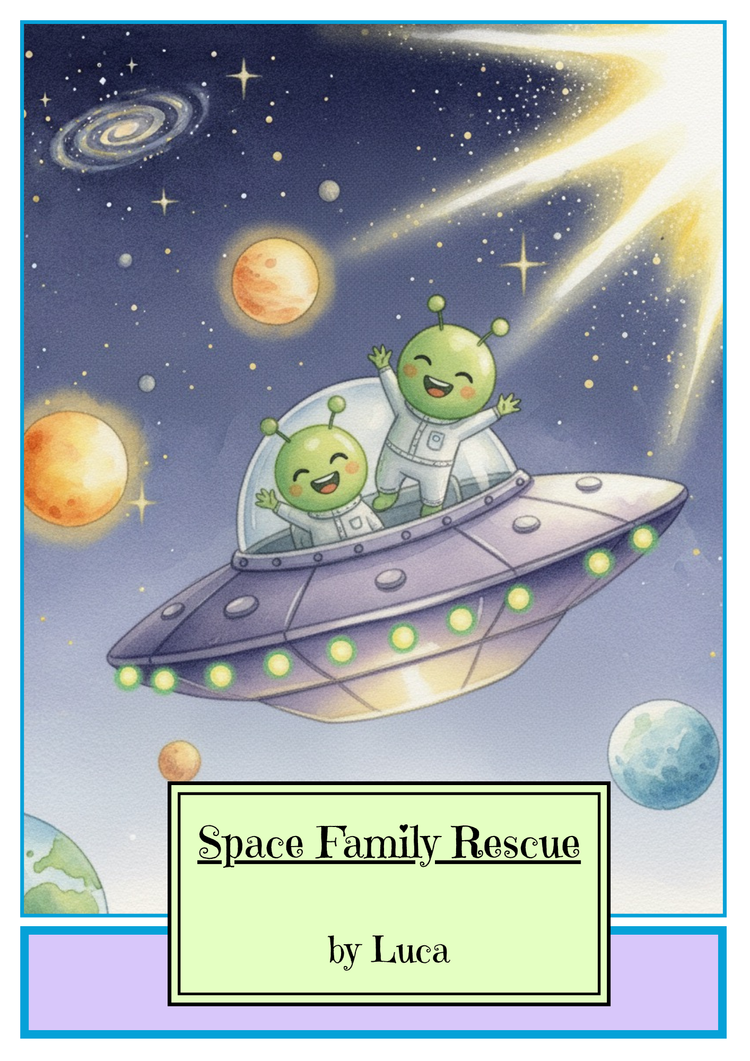
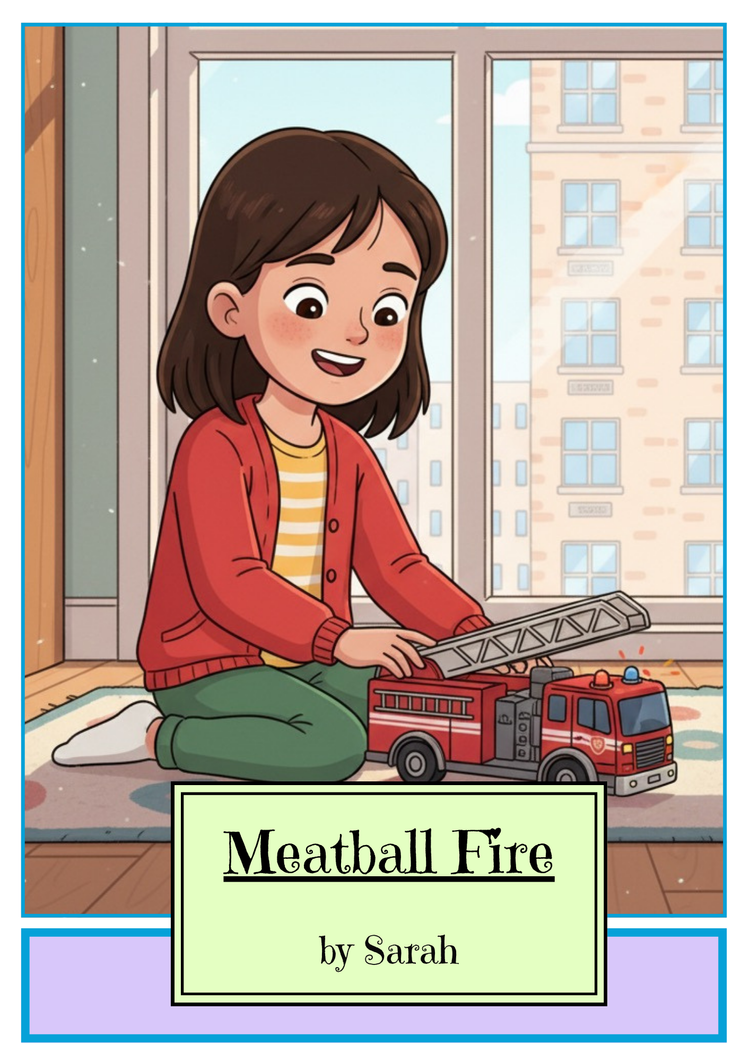
A finished storybook
Learner ideas become a revisitable illustrated text, available digitally and as a printed classroom copy.
These are examples from the project, not a claim that every story follows an identical production process.
Tools that keep the story centred on the learner.
These examples show how learners can shape a character, teachers can gather ideas without leading the responses, and AI prompts can be built around specific language goals.

Developing characters
A learner-facing worksheet for describing a character, drawing ideas and choosing useful adjectives.

Guiding without taking over
A bias-aware teacher prompt guide encourages open-ended choices and supports quieter learners during co-creation.

Planning the AI prompt
Learning goals, target vocabulary, characters and plot details become a structured prompt that the teacher can refine and review.
Illustrated pages built around meaningful language.
Examples of completed story pages pair text with contextual illustrations, offering natural starting points for reading aloud, discussion and revisiting selected words.


Sample spreads are drawn from different illustrated stories; they are not consecutive pages of one book. Examples are presented to illustrate the teaching approach.
Vocabulary is selected before it appears in the story.
Target words come from classroom learning goals, the existing curriculum and the needs of the learners. In the original classroom project, words were organised into four practical categories.
High-frequency words
Common words that learners are likely to meet repeatedly in early reading and classroom texts.
Oral vocabulary
Words practised in speaking and listening activities that can be used in characters' dialogue.
Selection vocabulary
Words chosen to connect the story with a lesson, theme or current unit of study.
Domain-specific vocabulary
Topic-related language that helps learners talk about ideas within the story.
Examples are drawn from the Story Learning Lab classroom project. The categories describe its instructional planning, not a universal classification of these words.
AI helps make the materials. Teachers make the decisions.
AI-assisted tools can help turn student ideas into illustrated, narrated stories. But teacher review is essential: a fluent-looking story is not automatically accurate, developmentally suitable or instructionally useful.
The teacher remains responsible for vocabulary choice, the finished narrative and appropriate handling of student information and work.
Teacher review checklist
- Match the words and difficulty to the learner.
- Check grammar, meanings and narrative coherence.
- Check illustrations and narration for accuracy and suitability.
- Protect learners' privacy and obtain appropriate permissions before sharing work.
- Plan what learners will do with the story after it is made.
The story is a starting point, not the finish line.
Repeated encounters, discussion and retrieval give learners ways to practise the language beyond their first reading.
Read and listen
Explore the story's meaning with pictures, text and narration.
Talk about the story
Ask questions, explain choices and notice important words.
Use the vocabulary
Retell events, practise words and apply them in new sentences.
Read again, adjust
Return to the printed or digital story as the teacher observes progress.
See the stories. Explore the thinking. Try the resources.
Follow the approach from classroom ideas through to a finished book, or browse the research and materials that inform it.